Privacy Mobile Device Pattern
Click any control badge to view its details. Download SVG
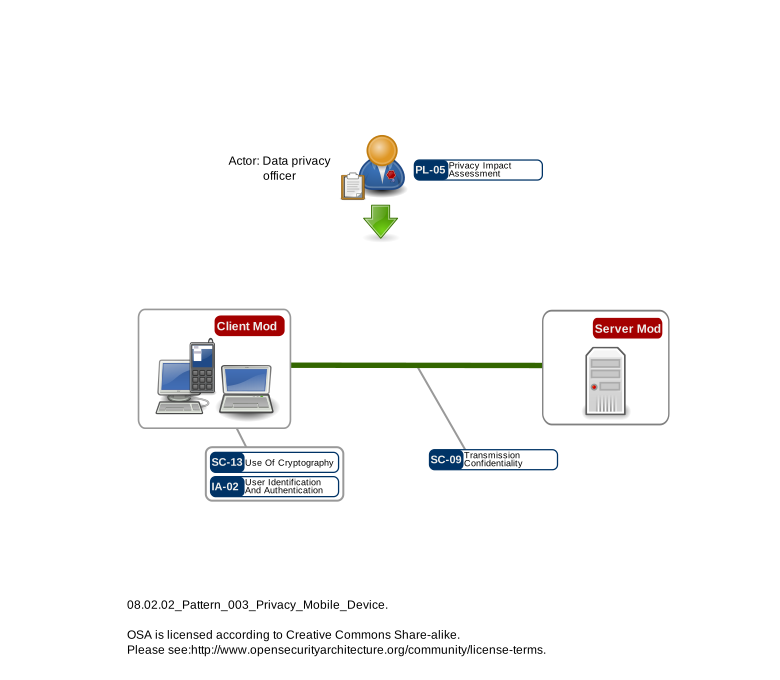
Key Control Areas
Data Minimisation and Purpose Limitation
Encryption and Data Protection at Rest
Secure Transmission of Personal Data
Consent Management and Data Subject Rights
BYOD Privacy and Corporate-Personal Separation
Data Protection Impact Assessment for Mobile Processing
When to Use
Apply this pattern when the organisation processes personally identifiable information on mobile devices and is subject to data protection regulations such as GDPR, CCPA/CPRA, HIPAA, LGPD, POPIA, or sector-specific privacy requirements. This includes organisations in regulated industries (financial services, healthcare, legal, insurance) that handle client or patient PII on mobile devices, any organisation subject to California SB-1386 or its successor CCPA breach notification requirements, organisations deploying mobile applications that collect user data, and BYOD environments where corporate data containing PII coexists with personal data on employee-owned devices.
When NOT to Use
This pattern is not necessary if the organisation does not process any PII or confidential personal information on mobile devices and has technical controls in place to prevent PII from reaching mobile endpoints. It does not apply to mobile devices used exclusively for non-sensitive corporate functions where no personal data is accessed or stored. Organisations that prohibit mobile device access to personal data systems and enforce this through network-level controls may not need this pattern, though they should still consider the residual risk of personal data in email, messaging, and cached web content on mobile devices.
Typical Challenges
The primary challenge is visibility: organisations often lack a complete inventory of what personal data exists on which mobile devices, making it difficult to respond to data subject requests or demonstrate compliance during audits. Data subject access requests and right-to-erasure requests are particularly complex when personal data may be cached on multiple mobile devices in offline-capable applications. BYOD environments create tension between the organisation's need to protect corporate data and the employee's expectation of personal privacy -- overly intrusive MDM policies drive shadow IT behaviour where employees avoid managed devices. Mobile application developers (both internal and third-party) frequently embed analytics and advertising SDKs that collect personal data without adequate privacy assessment, creating compliance exposure. Cross-border data transfer is complicated by mobile devices that travel internationally, potentially triggering data localisation requirements when a device containing EU personal data is carried to a non-adequate country. Secure deletion on mobile devices is not always straightforward -- flash storage wear levelling means that deleted data may persist in unallocated blocks, though modern hardware-backed encryption mitigates this by making the data unreadable when the key is destroyed.
Threat Resistance
This pattern addresses the threat of unauthorised disclosure of personal data through device loss or theft, mitigated by encryption at rest and remote wipe capabilities. It resists privacy violations from excessive data collection by mobile applications through data minimisation principles and application privacy auditing. The pattern mitigates regulatory non-compliance risk from uncontrolled mobile processing of personal data by providing governance frameworks for mobile privacy. It addresses the threat of personal data interception in transit through mandatory TLS and VPN usage. In BYOD scenarios, it mitigates the risk of privacy infringement against employees through containerisation and transparent monitoring policies. It provides partial resistance against insider threats involving personal data exfiltration from mobile devices through DLP controls and application restrictions. The pattern does not fully mitigate targeted device exploitation by nation-state actors, though device encryption and hardening significantly raise the cost of such attacks.
Assumptions
The organisation processes PII or other regulated personal data on mobile devices and is subject to data protection legislation (GDPR, CCPA, HIPAA, or equivalent). Mobile device management infrastructure exists or can be deployed to enforce privacy-related device policies. The organisation has a data protection officer or equivalent function capable of advising on mobile privacy requirements. For BYOD scenarios, the organisation has the legal and contractual basis to apply containerisation and selective management to personal devices. Users have been informed about the personal data processing that occurs on their mobile devices and appropriate consent or legal basis has been established.
Related Patterns
Patterns that operate within or alongside this one. Click any to view.